
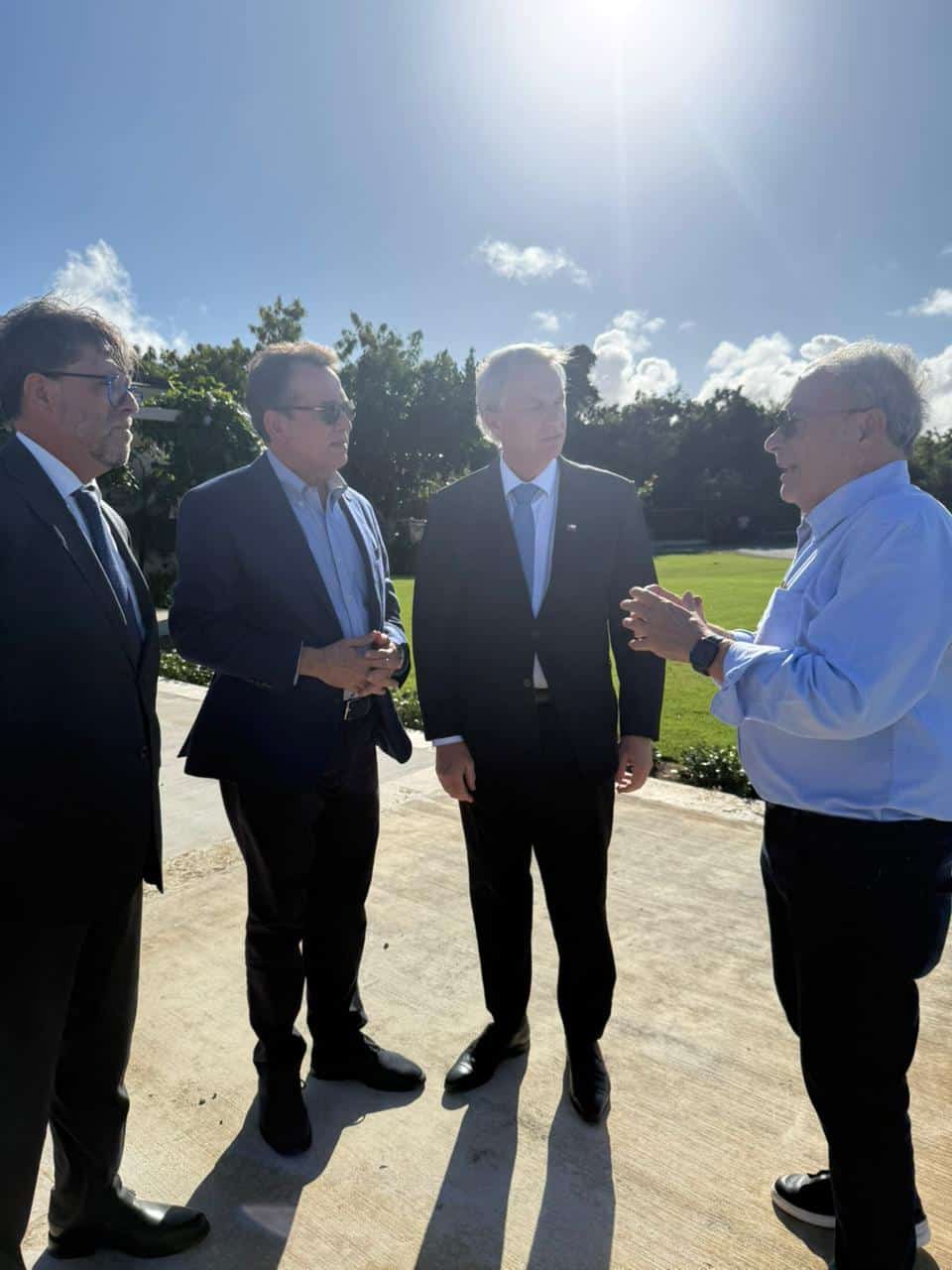
Punta Cana, Dominican Republic.
The President-elect of Chile, José Antonio Kast, arrived this Saturday in the Dominican Republic to begin an official agenda that includes high-level meetings with President Luis Abinader, as well as encounters with government authorities and representatives from both the public and private sectors.
Upon his arrival at the Punta Cana International Airport, Kast was welcomed by the Minister of Housing and Buildings (Mived), Víctor Bisonó, and the prominent tourism mogul Frank Rainieri, founder of the Puntacana Group and a pioneer of the country’s tourism development.
During his stay in the Dominican Republic, the Chilean leader-elect will hold institutional meetings, conduct official visits, and participate in activities alongside the Dominican Head of State. This program is designed to facilitate the exchange of public management experiences and strengthen regional cooperation.
A key highlight of the agenda is a tour of the border zone, where both leaders will gain firsthand knowledge of initiatives related to security, trade, and territorial governance—issues of mutual interest for both nations.
Víctor Bisonó, who also serves as the president of the Center for Analysis of Public Policy (CAPP), emphasized that this visit represents a strategic opportunity to tighten bilateral ties, promote regional dialogue, and share best practices regarding public policy, democratic institutions, and mutual respect between states.
Furthermore, Kast’s schedule includes meetings with key players from the business and social sectors, creating spaces for dialogue on economic development, regional security, and international cooperation within the context of shared Latin American challenges.
Tour of the Dominican-Haitian Border
On Sunday, President Luis Abinader and the Chilean President-elect are scheduled to visit the border perimeter fence in Dajabón. During the visit, they will receive a presentation from the Minister of Defense, Carlos Antonio Fernández Onofre, regarding the progress of the construction.
According to official information from the Presidency, the activity will also include the participation of the Dominican Foreign Minister, Roberto Álvarez, Minister Víctor Bisonó, and other invited officials.
The construction of the border fence began on February 20, 2021, in the province of Dajabón, with the first section inaugurated in October 2023. President Abinader has championed the project as a vital tool for improving bilateral trade control, regulating migratory flows, and combating crimes such as human trafficking, drug smuggling, illegal arms sales, and livestock theft in agricultural areas.
The Dominican leader reiterated that this infrastructure also aims to halt the expansion of organized crime along the border strip shared by the Dominican Republic and Haiti, which spans approximately 400 kilometers across the island of Hispaniola.
