
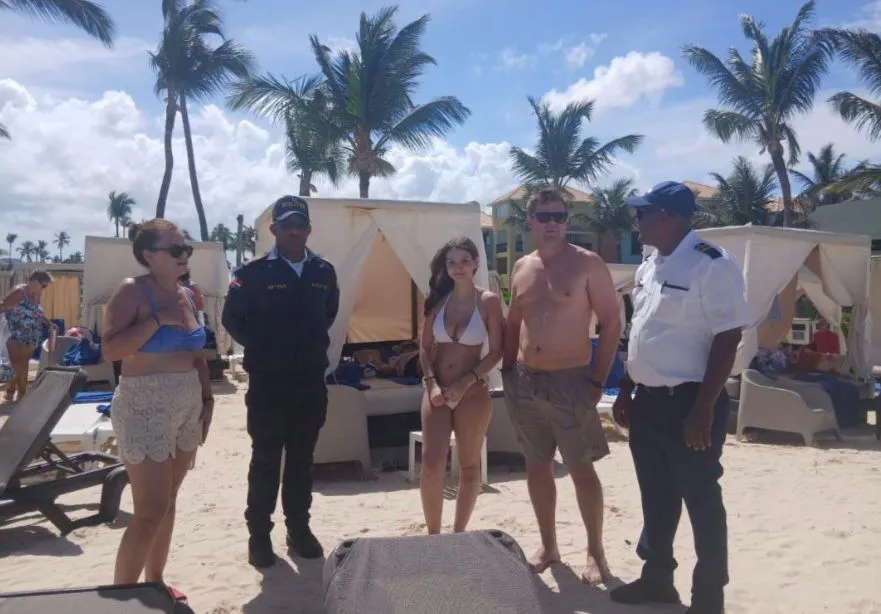
The safety of the Dominican Republic’s most iconic coastline is not left to chance. In a detailed operational report released this week, the Tourist Police (CESTUR) confirmed a massive mobilization of resources aimed at protecting the millions of visitors who call the East Coast home each year. Between February 23 and March 1, 2025, authorities successfully completed 40,238 individual interventions, ranging from routine guidance to critical emergency responses.
News Snapshot
- Event Date: February 23 – March 1, 2025.
- Location Impacted: Punta Cana, Bávaro, Uvero Alto, and Cabeza de Toro.
- Key Stakeholders: General Minoru Matsunaga (Director of CESTUR), Colonel Juan Pascual Deschamps (Deputy Director, Bávaro).
- Primary Outcome: 40,238 assistance services provided; 2 immigration referrals; 4 gender violence interventions.
Hyperlocal Context & Location Highlights
The operational deployment was meticulously mapped to cover the highest-traffic zones in the region. From the bustling Bavaro beachfront to the serene stretches of Uvero Alto, the presence of specialized agents has become a staple of the Punta Cana lifestyle.
Visitors staying in the Blue Mall area or the Downtown Punta Cana district have likely noticed the increased frequency of patrols. These units are not merely for enforcement; they serve as a mobile concierge for the destination, providing “preventive support” and “immediate response” in areas like Cabeza de Toro and the Punta Cana Village. This hyperlocal strategy ensures that whether a guest is at a luxury condo in Cap Cana or a boutique hotel in Los Corales, professional help is always within reach.
Detailed Analysis
H3 – Economic Impact: Protecting the Investment Climate
For those following Dominican Republic investment news, these figures are a vital indicator of stability. A destination that can manage over 40,000 interactions in a single week without major incident demonstrates a high level of institutional maturity. This security infrastructure directly supports property values, as international buyers are more likely to invest in a condo or vacation home where the state actively guarantees “peace and institutional presence.”
H3 – Community & Lifestyle: Beyond Simple Policing
The report highlights that the vast majority of the 40,000+ interventions were focused on “guidance and accompaniment.” This “service-first” philosophy is what differentiates the Punta Cana experience from other Caribbean hubs. By acting as guides and protectors, CESTUR agents integrate into the daily life of the community, making the region feel more like a secure neighborhood than a transient tourist zone.
H3 – Future Outlook: Consistency and Legal Rigor
The authorities have made it clear that these operations are not one-off events. The institution reiterated that these deployments will continue “periodically and consistently.” Furthermore, the report detailed the referral of undocumented individuals and those accused of gender violence to the appropriate judicial units in Higüey, showing that while the police are helpful, they are also rigorous in upholding the law.
Expert Perspective & Investment Angle
From a professional standpoint, the sheer volume of these services—averaging nearly 6,000 actions per day—highlights the scale of the Punta Cana tourism engine. For investors, this represents a “security moat” that protects their ROI. When a destination prioritizes safety to this degree, it ensures long-term sustainability and high demand for short-term rentals. The sophisticated approach taken by General Minoru Matsunaga and his team provides the “aspirational safety” that luxury travelers and high-net-worth investors demand in 2025.
