
Guáyiga: the poison the Taínos learned to neutralize
Guáyiga is not a tuber. It is the starchy stem of a cycad, a distant relative of palms, and it contains a genuine poison called cycasin. That it is food today rather than a hazard is the result of a precise technique the Taínos already controlled before 1492.
Victor Matos September 6, 2026
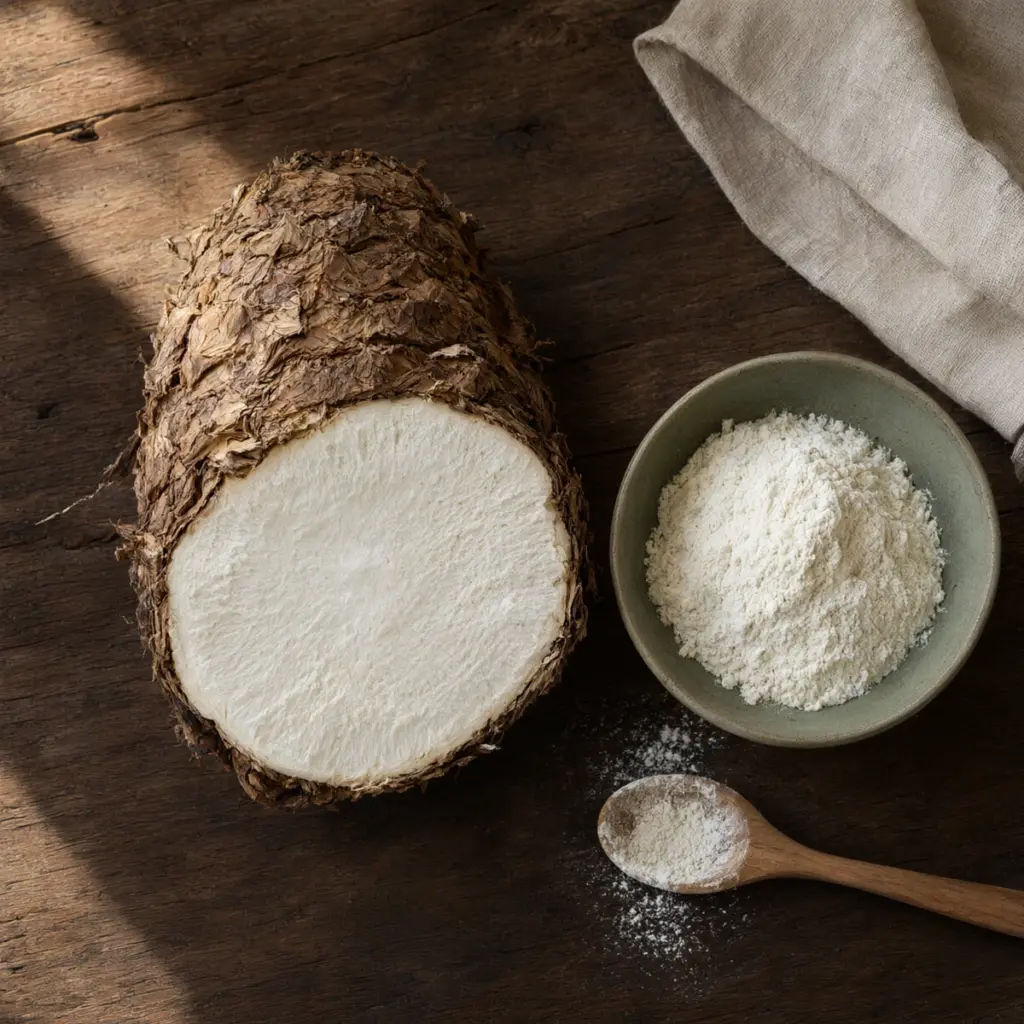
Guáyiga is not a tuber. It is the starchy stem of a cycad, a distant relative of palms, and it contains a genuine poison called cycasin. That it is food today rather than a hazard is the result of a precise technique the Taínos already controlled before 1492.
A poison that is processed, not avoided
Fray Bartolomé de las Casas described the method in his Apologética Historia de las Indias: the guáyiga was grated “as one would grate a turnip or a carrot” into a white mass, dried in the sun as loaves until it was, in his words, swollen with worms, and only then cooked. The Dominican archaeologist Marcio Veloz Maggiolo proposed that enzymes from those larvae acted as a biological neutralizer of the cycasin, allowing safe consumption of something that would otherwise be dangerous.
More important than corn or casabe in Higüey
Las Casas documented something that surprises today: in the chiefdom of Higüey, in the east of the island, guáyiga mattered more as a staple food than corn, cassava or casabe.
The date that can be proven, and the one that cannot
Starch analysis on griddles from La Luperona, in northwestern Dominican Republic, calibrated to 1352 AD, shows its inhabitants specialized in guáyiga products. It is the most solid dated evidence specific to Hispaniola in this entire ingredient catalog.
A figure that circulates on tourism and gardening sites, claiming guáyiga processing 3,800 years ago at Cueva de Berna, could not be verified in any academic or institutional source. It is not used here for that reason: not every number that sounds good has a real study behind it.
Current recognition
Guáyiga flour is listed in the Slow Food Foundation’s Ark of Taste, the international catalog of food heritage at risk of disappearing.
Sources
- Berman, M. J. et al., “Late Precolonial Culinary Practices: Starch Analysis on Griddles from the Northern Caribbean”, Journal of Archaeological Method and Theory (2019). link.springer.com
- Leiden University, NEXUS1492 project. universiteitleiden.nl
- Slow Food Foundation, Ark of Taste. fondazioneslowfood.com