
Batata: the tuber that gave the potato its wrong name
The word batata is a direct gift from Taíno to Spanish, and from Spanish to English: when the chroniclers of the Indies mistranslated batata as potato, they permanently handed the Andean potato the name of a Caribbean tuber it has nothing to do with.
Victor Matos September 6, 2026
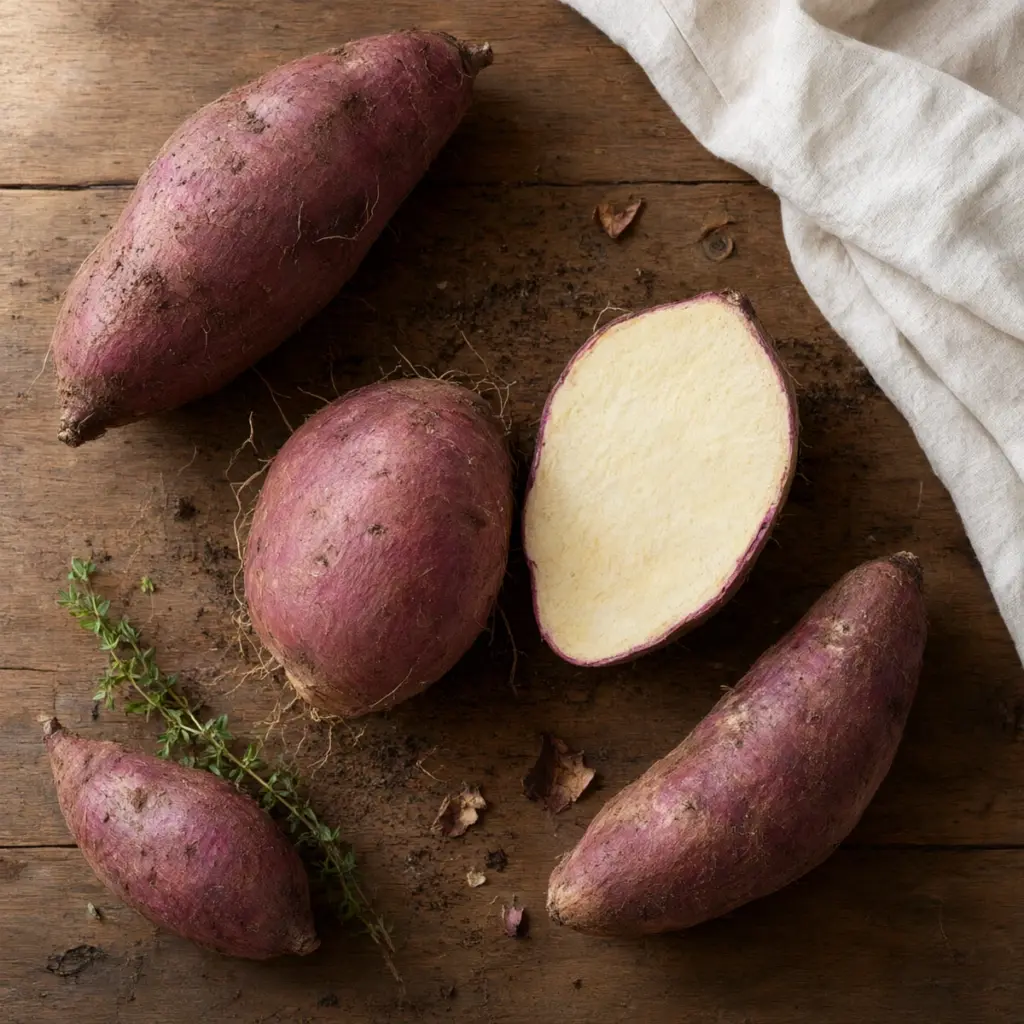
The word batata is a direct gift from Taíno to Spanish, and from Spanish to English: when the chroniclers of the Indies mistranslated batata as potato, they permanently handed the Andean potato the name of a Caribbean tuber it has nothing to do with.
Domesticated in Peru
Genetic consensus places the center of diversity and domestication of the sweet potato (Ipomoea batatas) in Peru, sharing an ancestor with Ipomoea trifida. The oldest archaeological remains are desiccated tubers from coastal deposits in the Casma valley, Peru, dated between 1500 and 1800 BC, associated with domestic structures that suggest cultivation rather than gathering.
A Caribbean date older than the one for Hispaniola
There is no archaeobotanical study fixing the arrival of batata on Hispaniola specifically. There is solid evidence of its presence in the early precolumbian Caribbean diet: starch analysis on tools from archaic sites in Puerto Rico and Vieques identified batata starch, alongside corn and beans, in contexts dated to around 4,500 years ago, the oldest known evidence of maritime circulation of food plants in the Americas.
Cultural layer
It is a purely precolumbian American crop, with no Spanish or African layer in its origin. It joins the colonial diet later, but it reached the Taíno table long before 1492.
Sources
- “Disentangling the Origins of Cultivated Sweet Potato (Ipomoea batatas)”, PLOS ONE (2013). journals.plos.org
- “Sweet potato (Ipomoea batatas)”, in The Ecology of Tropical Food Crops, Cambridge Core. cambridge.org