
Casabe Lasagna: cassava bread instead of pasta sheets
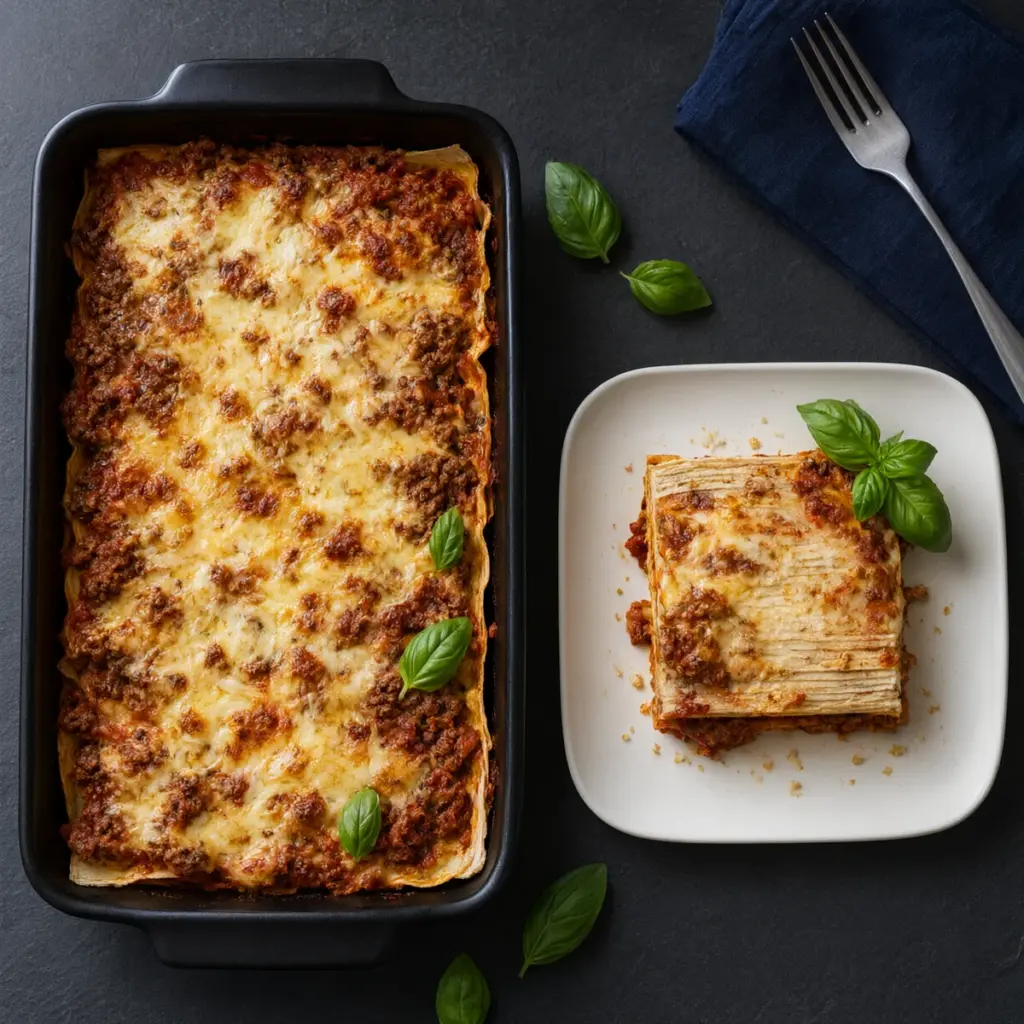
Casabe is the oldest bread in this kitchen, made from cassava rather than wheat, and it was here before the conquest rather than after it. That is what interests me: not replacing the pasta, but putting casabe where nobody puts it. The lasagna was the excuse. It is misted with water, rested for five minutes, cut with scissors and laid in raw. It absorbs the sauce better than pasta does.
Victor Matos September 6, 2026
Ingredients
- Casabe, enough for 3 layers
- 1 pound of ground beef, high quality, 2% fat
- 1 medium onion, minced small
- Dominican sofrito
- Homemade Dominican tomato sauce, the full recipe
- 1/4 cup of Rioja red wine (optional)
- 16 oz cottage cheese, 15 oz ricotta, 1 egg, 2 tablespoons chopped parsley
- 4 cups shredded mozzarella, divided, and 1/4 cup parmesan
Method
Mist the casabe with water and let it rest for five minutes to soften. Use that time to move the tomato sauce forward or to brown the beef.
Cut the softened casabe with scissors into long strips.
Cook the finely minced onion together with the sofrito.
Brown the ground beef separately, then fold it into the tomato sauce. That is the bolognese.
Mix the cottage cheese, ricotta, egg and parsley.
Layer: casabe, cheese mixture, bolognese. Repeat three times, finishing with the mozzarella and parmesan on top.
Bake until the cheese is set and browned.
Where lasagna comes from
The word did not name the dish but the pot. It comes from the Greek lasanon, which passed into Latin as lasanum: the vessel the food was cooked in. In the first century, Apicius described in De re coquinaria a dish of lagana, thin sheets of dough baked with a filling, and that is the oldest surviving antecedent. Layered lasagna as it is known today took shape much later, in Emilia-Romagna.
If the original name belonged to the vessel and not to the pasta, then changing the sheet betrays nothing. Here the sheet is casabe, the cassava bread that was on this island before wheat was.