
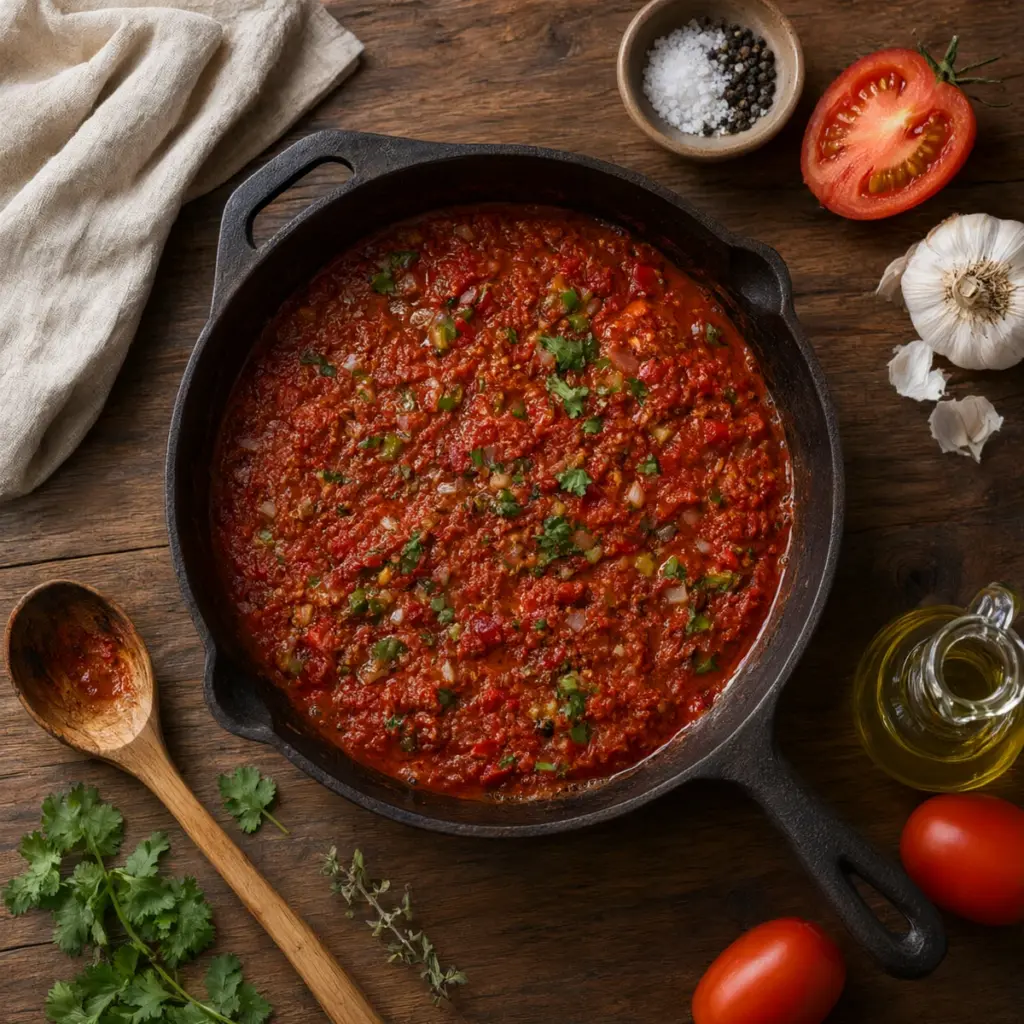
Homemade Dominican Tomato Sauce, made with Bugalú tomatoes
No sauce leaves this kitchen from a can. It is made with fresh tomatoes, Bugalú specifically, built on the same sofrito kept in reserve, and it is prepared only for the dishes that actually call for it. Unlike the sofrito, this is not a universal step.
Victor Matos September 6, 2026
Ingredients
- 1 tablespoon of olive oil
- 2 tablespoons of Dominican sofrito, kept in reserve
- 1/4 teaspoon of salt, no more, because the sofrito already carries salt
- 2 pounds of Bugalú tomatoes, halved
- A little water
Method
Put the olive oil, the sofrito and the salt in a large pan. Wait for the sofrito to release its flavor.
Add the halved tomatoes with the skin facing up, and cover the pan.
After about four minutes, lift the loosened skins off with tongs and discard them.
Over medium low heat, press the tomatoes with a masher until everything blends together, reduces, and the sauce takes on a deep red color.
Add a little water to bring it to the right consistency.
To turn it into bolognese
Brown the ground beef separately, never in the same pan from the start, then fold it into the finished sauce. A splash of Rioja red wine is optional.
Where tomato sauce comes from
The first written recipe for tomato sauce was published in Naples in 1692, and it was called salsa di pomodoro alla spagnuola: tomato sauce in the Spanish style. Antonio Latini signed it, and it called for tomatoes roasted over coals, onion, thyme, chili, salt, oil and vinegar. It was not yet a sauce for pasta but something closer to a cooked tomato salad.
The name says everything: in the Europe of that moment the tomato was the Spanish thing, because it had arrived from the Americas with the empire. The sauce made in this kitchen closes that circle. The tomato returns to the Caribbean, it is cooked fresh and never from a can, and the base is no longer Latini’s onion but the sofrito of the house.