
Punta Cana growth is not a forecast. It is the architecture we refuse to read.
The tropical waves and electrical storms crossing our sky this week are not interruptions of Punta Cana growth; they are the only honest urban planners we have left, revealing that the concrete we pour so confidently against the Caribbean horizon is engaged in a permanent, losing negotiation with an atmosphere that does not care about our occupancy rates. I watched the sky from my office window this morning — that heavy, yellow-gray canvas that presses down on the rooftops before the rain arrives, the kind of light that makes the glass facades of the new towers look like bruised mirrors — and I thought about what we are actually building here. We treat the weather reports issued by Indomet as minor inconveniences, little meteorological footnotes to be scrolled past on our way to the real news about resort openings and flight arrivals. But am I wrong to suspect that we have it exactly backward? That the weather is the main text, and everything else we build is just a footnote written in disappearing ink? I walked out into the street later, feeling the air wrap around my arms like a wet wool blanket, that particular Bávaro humidity that doesn’t just surround you but enters you, and I realized that our entire model of expansion assumes a climate that no longer exists. We are building a city designed for postcards while living inside a machine that generates thunderstorms. And yet, when the sky opens up and the water rushes down the freshly paved avenues, we don’t stop pouring concrete. We just pour it faster.
Aurelio Nicéforo Beltré September 11, 2026
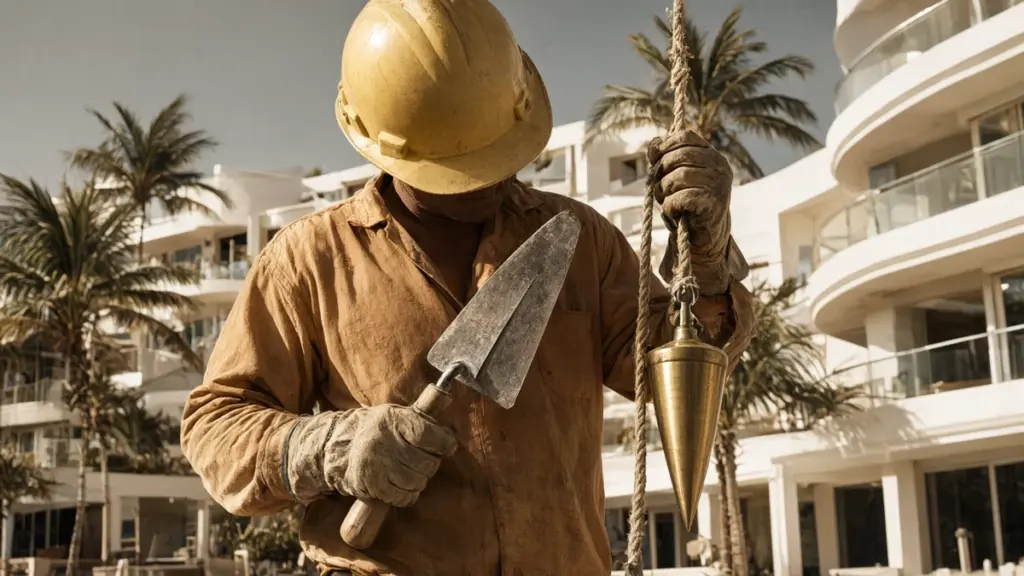
Punta Cana growth does not negotiate with steel
Indomet — our national meteorological institute — warned us yesterday about what was coming: a tropical wave colliding with a trough, a meteorological phrase that sounds clinical until you are standing under it. They promised downpours and electrical storms for Thursday, and they delivered. I stood by the window and watched those massive, rotating steel arms that lift iron beams against the darkening afternoon sky over in the new commercial district. You know the ones. They pivot slowly, almost lazily, hoisting tons of material into the clouds as if daring the lightning to strike. When the first crack of thunder hit, vibrating through the glass and rattling the coffee cup on my desk, the machinery didn’t stop immediately. It hesitated. The men on the ground looked up, shielding their eyes against the sudden absence of light, and for a moment, the entire construction site seemed to hold its breath, suspended between human ambition and atmospheric violence.
You might think I am being dramatic. You might say, Aurelio, every tropical city deals with rain; why should this coast be any different? Why do you insist on turning a low-pressure system into a philosophical crisis? I hear you. I hear the developers who tell me that drainage systems are being upgraded, that the engineering is sound, that the concrete is rated for hurricane-force winds. And maybe they are right. Maybe the math works out on paper. But then explain to me why, every time the sky turns that specific shade of bruised purple, the streets near the newer developments turn into shallow rivers within twenty minutes. Explain to me why the water finds the exact places where we removed the mangroves to lay the foundation stones. The rain does not read our architectural blueprints. It reads the topography we tried to erase.
What fascinates me, though — what keeps me writing about this instead of something safer — is not the storm itself, but our reaction to it. We do not retreat. There is a strange, stubborn pride in how this place operates. The storm passes, the sun returns with that blinding, unapologetic intensity that bakes the puddles into steam by noon, and the trucks start moving again. Those heavy vehicles with rotating metal drums on their backs, churning gray liquid endlessly so it doesn’t harden before it reaches the molds, were rolling down the boulevard again two hours after the worst of the lightning stopped. This is not denial. It is something closer to defiance. We are building a civilization that refuses to acknowledge the terms of its own geography, and there is a terrible, magnificent beauty in that refusal. If you want to understand the sheer velocity of what is happening outside your hotel window, look at how the infrastructure projects reshaping the eastern coast move even when the barometer drops.
But defiance has a cost, and the cost is measured in the very soil we are covering. The tropical wave that Indomet tracked across the Atlantic did not form because of our hotels, but it interacts with them now. The heat radiating off our vast expanses of asphalt creates its own micro-climate, lifting the humid air faster, feeding the very storms we complain about. We are not merely enduring the weather; we are participating in its creation. Every new parking lot, every widened highway, every square meter of forest replaced by polished stone alters the way the wind moves through Bávaro. We are co-authors of the turbulence, even if we only ever claim credit for the sunshine.
I often wonder if the architects flying in from Miami or Madrid understand this. They arrive with their renderings showing people in white linen walking under perfectly blue skies, holding cocktails that never melt too fast. They design for the brochure. But I live here. I feel the barometric pressure drop in my joints before the radio announces it. I know that the building they are designing will spend more of its life fighting the moisture than enjoying the breeze. And yet, I cannot bring myself to wish they would stop. Because the alternative — leaving this coast empty, surrendering it back entirely to the mosquitoes and the salt spray — feels like a betrayal of the human impulse to gather, to build, to try. Even if we are trying against impossible odds.
Thirty-two degrees and the illusion of control
Today, Friday, the forecast promises us the same relentless theater: sun, passing clouds, isolated showers, and temperatures pushing thirty-two degrees Celsius. Thirty-two degrees. A number that means nothing until you step outside at one in the afternoon and feel the air thicken into something you have to push your way through. The humidity here doesn’t just accompany the heat; it weaponizes it. It settles on your skin like a second layer of clothing you never asked to wear. And yet, looking out at the avenue, the movement is staggering. The roads are choked with those small, three-wheeled motorized carts painted in bright blues and yellows, darting between luxury SUVs, carrying workers to the sites, tourists to the beaches, locals to the markets. The energy is frantic, undeniable, alive with commerce. Am I supposed to look at this and see vulnerability? Or am I supposed to see the most resilient economy in the Caribbean?
I choose the latter, though the skeptic in me — that voice that wakes up at four in the morning and stares at the ceiling fan cutting through the heavy air — insists on complicating the picture. We build our resorts, our malls, our residential towers, all predicated on the idea that the climate can be managed. We install massive cooling systems, those humming metal boxes bolted to the sides of buildings that exhale hot air into the streets to keep the interiors freezing. We seal the windows. We create artificial atmospheres inside our structures while the real atmosphere rages outside. Is this mastery? Or is it a very expensive form of hiding? I watch the tourists stepping out of air-conditioned buses into the thirty-two-degree wall of heat, gasping for a second before adjusting, and I realize we have built an economy based on the temporary suspension of reality. We sell them a version of the tropics that has been sanitized, cooled, and filtered.
But the workers who build these sealed environments do not get to hide. The men tying rebar in the midday sun, their shirts soaked through before nine in the morning, their hands wrapped in tape to prevent blisters from the heated metal — they are the ones negotiating the actual climate. The official reports from the Ministry of Tourism celebrate the record-breaking arrival numbers, and rightly so, because the economic engine is miraculous. But the miracle requires a labor force that endures the very conditions we market as paradise. The thirty-two degrees is not a backdrop; it is a physical weight pressing down on the shoulders of everyone laying the bricks. I have seen men resting in the sliver of shade provided by a single cinderblock wall, drinking water from plastic bags, waiting for the heat to break. It never really breaks. It just slightly relents.
And here is where my mind twists back on itself, where the fever of living in a boomtown takes over. If the heat is so oppressive, if the storms are so violent, why do I love this place so fiercely? Why do I defend it against anyone who calls it a fragile experiment? Because the fragility is the point. A city built in a gentle climate requires no courage. But a city carved out of a tropical furnace, constantly battered by ocean-born electrical systems, rising higher every year despite the atmosphere actively trying to tear it down — that requires a kind of collective madness that I find deeply inspiring. We are not victims of our weather. We are sparring partners with it. Every tower that goes up after a storm is a punch thrown back at the sky.
There is a dark comedy in it, of course. You have to laugh, or you’ll lose your mind watching the daily contradictions. Just last week, I saw a brand-new, multi-million-dollar electric vehicle charging station completely submerged under a foot of brown water after a brief afternoon shower, while a man on a donkey walked calmly past it on the elevated sidewalk, entirely dry. We import the future, but we still live in the geography of the past. The thirty-two-degree heat doesn’t care about your lithium-ion infrastructure. It only cares about gravity and evaporation. Yet, tomorrow, someone will pump the water out, wipe down the chargers, and plug in another car. The persistence is absurd. It is also our greatest asset.
The rhythm of the water and the architecture of anticipation
When Indomet issues these forecasts — the tropical waves, the troughs, the isolated showers — they are not just predicting rain. They are providing the rhythm section for the entire city’s economy. Watch how Bávaro moves when a storm is announced. It doesn’t panic. It accelerates. The construction crews pour the concrete earlier in the day. The logistics companies reroute the trucks carrying those long, flat sheets of glass destined for hotel lobbies, timing their journeys to miss the heaviest downpours. The restaurants secure the outdoor furniture. It is a choreography born of necessity, a dance with the atmosphere that has become so ingrained in our culture we no longer recognize it as adaptation. We just call it Tuesday. Or Thursday. Or whatever day the sky decides to fall.
I am told by friends in Europe — those who read about us from a comfortable, temperate distance — that building a metropolis in a hurricane corridor is an act of hubris. They look at the satellite images of swirling cloud masses forming off the coast of Africa and tracking toward Hispaniola, and they see doom. But they are not sitting in my office, feeling the vibration of the pile drivers sinking steel deep into the limestone bedrock. Those rhythmic, concussive thuds that shake the floorboards every few seconds are not the sound of hubris. They are the sound of certainty. The engineers driving those pillars know exactly what the wind can do. They calculate the load. They factor in the water table. They are not ignoring the weather; they are translating it into mathematics, turning the threat of the storm into a structural requirement. The buildings going up today are not the fragile structures of twenty years ago. They are fortresses disguised as luxury.
But let us complicate this triumph, because a journalist who only praises is just a publicist with a vocabulary. The mathematics work for the high-rises, for the international resorts backed by global insurance policies. But what about the spaces in between? What about the neighborhoods where the roofs are lighter, where the drainage relies on gravity finding its own way through unpaved channels? The tropical wave does not discriminate between a five-star lobby and a corner colmado. When the rain comes down in those thick, vertical sheets that reduce visibility to zero, the water seeks the lowest point, and the lowest point is rarely where the capital is concentrated. Our expansion is spectacular, yes. But it is unevenly armored. We are building a skyline that can withstand the apocalypse, attached to a street grid that still floods when a palm tree blocks a culvert. This tension between the monumental and the vulnerable is precisely what drives the real estate development reshaping Bávaro, forcing every new blueprint to answer questions the old ones ignored.
This is the paradox I wrestle with every time the barometer drops. I see the genius of our ambition, and I see the blind spots of our speed. We are moving so fast, adding so many rooms, so many roads, so many of those towering metal skeletons that scrape the clouds, that the secondary infrastructure — the invisible plumbing of a city — struggles to keep pace. The weather reports are a constant reminder of this gap. Every time Indomet warns of heavy rainfall, they are inadvertently auditing our urban planning. They are pointing out where we prioritized the visible over the essential. And yet, the audit never stops the construction. It just forces it to adapt, painfully, expensively, but inevitably.
So where does this leave us, staring out at the sky that promises us thirty-two degrees and electrical fire? It leaves us exactly where we have always been: in motion. I refuse to write the obituary for a city that hasn’t even finished being born. The skeptics see the storms and predict our ruin. I see the storms and watch us learn how to build better walls, deeper drains, stronger foundations. The weather is not our enemy; it is our editor. It crosses out our mistakes with floodwater and forces us to rewrite the next draft in reinforced concrete. Punta Cana growth is not happening despite the tropical waves and the crushing humidity. It is happening because of them. The resistance is what gives the structure its meaning. We are not building a city that ignores the Caribbean climate. We are building the only city arrogant enough, brave enough, and foolish enough to argue with it every single day. And as long as those steel arms keep rotating against the bruised sky, lifting the next beam into the path of the next storm, I will be here, watching, sweating, and betting on the concrete.