
A glossary of Dominican ingredients: what is from here and what arrived by ship
A cuisine is better told through its ingredients than through its recipes. This glossary sorts the Dominican ones by a single question: how long have they actually been here? The answer rearranges a good deal of what is taken for granted.
Victor Matos September 6, 2026
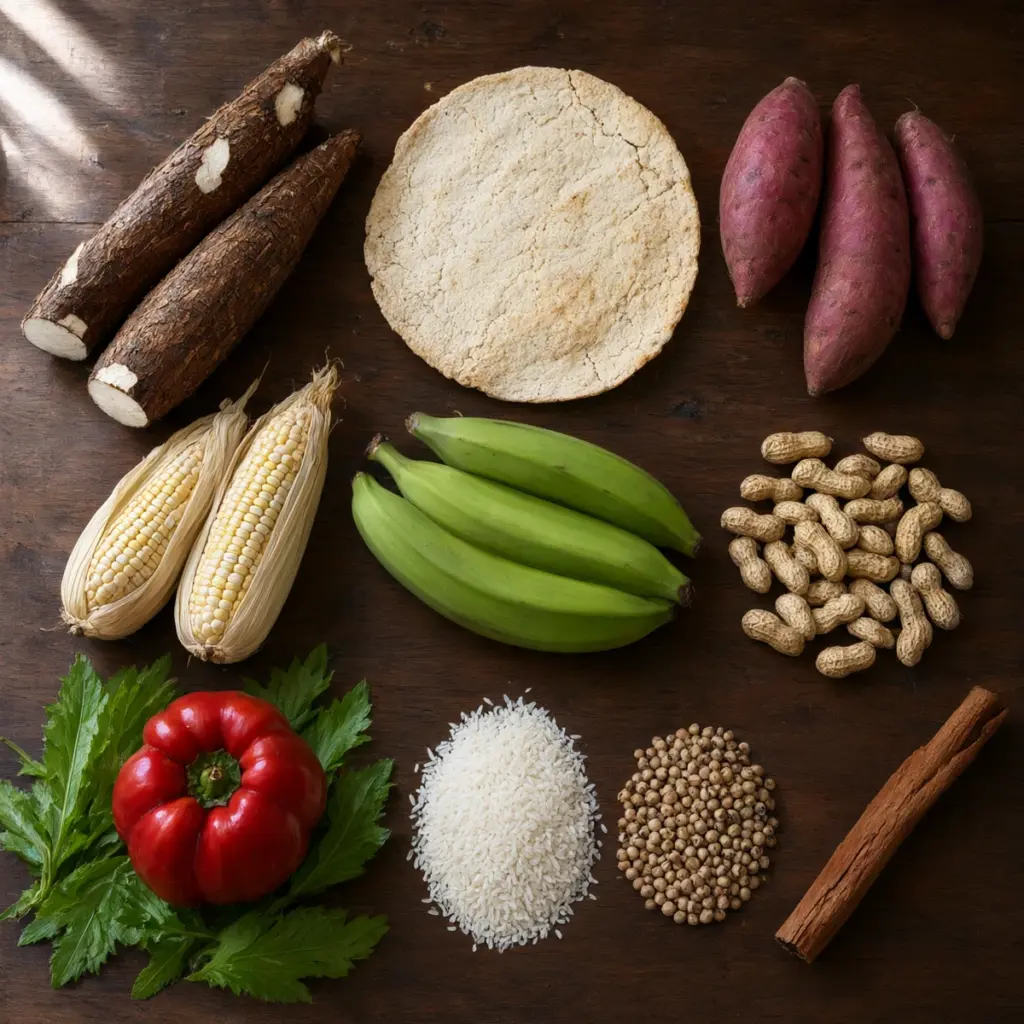
A cuisine is better told through its ingredients than through its recipes. This glossary sorts the Dominican ones by a single question: how long have they actually been here? The answer rearranges a good deal of what is taken for granted.
What was here before 1492
Only two central ingredients of the repertoire are genuinely precolumbian, and this is not an inference about migration routes: it is DNA recovered from coprolites on Vieques, dated between 245 and 600 AD.
- Corn, which in those remains was 48.4% of all identified plant material.
- Peanut, whose Spanish name is Taíno because there was nothing to replace.
To these belong the roots and the bread that held up the Taíno table: yuca, casabe, batata and guáyiga, the strangest case in the catalog: a toxic plant that became food through a processing technique.
What came later, and everyone believes is from here
The plantain arrived in 1516. Ñame and pigeon peas came along the routes of the slave trade. Rice has two origins and neither is American. Four ingredients that define the Dominican plate and were not here when Columbus arrived: the full history of the four.
What came from the other side of the world
Three of the six seasonings in sofrito are Asian, arriving through Iberian trade and the Manila Galleon. Another is African with a mistaken Cuban name, and another is not the plant almost everyone believes it is: the six seasonings, one by one.
How to use this glossary
Each entry says where the ingredient comes from, what evidence supports it, and what can and cannot be claimed. Where no study dates something, we say so: yautía, for instance, still has no archaeobotanical dating at all, only its Taíno name. A declared gap is worth more than an invented date.